
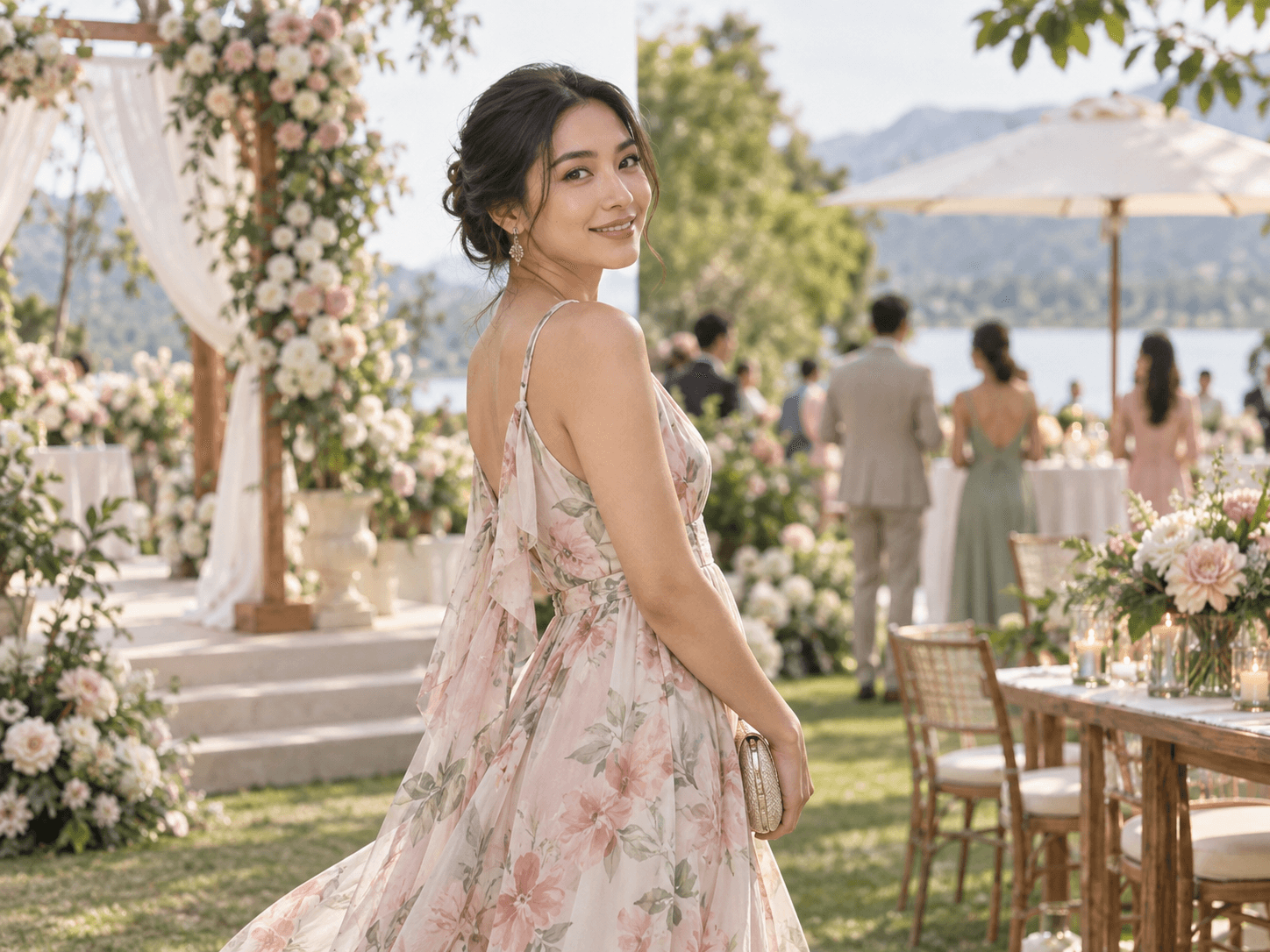
A daytime wedding is harder to dress for than it looks, because what constrains the outfit is not only the theme. Natural light shows colour and fabric as they really are, the temperature is higher than it will be in the evening, and the day rarely stays in one room. This guide takes the constraints one at a time so you are left with a short list to size-check and book.
Colour that works in daylight
Daylight renders colour more literally than banquet-hall lighting does. A shade that looks soft in a photo taken indoors can read brighter or sharper outdoors, so look at several photos of a dress and notice what light they were shot in. The point people overlook is that very dark shades absorb heat as well as looking flat under direct sun; if the day includes standing outside, a mid or lighter tone copes better.
Fabric that copes with daytime heat
Weight and the number of layers matter more than the name of the fabric. A fully lined dress, or one with several stacked layers, will always be warmer than it felt in an air-conditioned fitting room, so check each dress's details for lining and internal structure. Heavy light-catching decoration is designed to stand out under evening lighting; in daylight, the texture or weave of the fabric already gives a photograph depth.
Silhouette and length for the actual venue
Before settling on a length, picture the ground you will walk on. A lawn, a gravel path, or an uneven courtyard turns a high heel and a long hem into two problems at once, and if you cannot give up the lower heel, shorten the hem to match. A temple or other religious ceremony adds shoulder coverage and a modest cut to the list. A hotel with level floors and air conditioning is where a full-length dress is easiest.
When the day runs indoors and outdoors
Many daytime weddings do not stay in one place: an outdoor ceremony in late morning, then a reception in an air-conditioned room. The temperature gap between the two halves is wide enough that a dress suited to one is wrong for the other. The flexible route is to choose for the warmer half first, then add something you can put on and take off, in a fabric that will not crease from being layered mid-event.
A fit that lasts the whole event
Fit for a daytime wedding differs from fit for a dinner: you spend more of it standing, walking and photographing outdoors than seated at a table. A waist that measures right in a cool fitting room gets less comfortable once it is hot and you are moving, so leave a little more room than the numbers alone suggest. The measuring method is in the sizing guide — compare your own bust and waist against each dress's figures before deciding.
What to avoid, and when not to
There are only a few conventions worth starting from: avoid pure white and shades close to the bridal look, avoid an outfit that competes with the hosts, avoid a hem that drags at an outdoor venue, and avoid a cut that is too open for a religious ceremony. None of these is a fixed rule. If the invitation names a colour theme, or the hosts say otherwise, what the hosts say comes first.
Before you book
In order, then: read the venue and the time to narrow colour and length, read each dress's details for lining and construction, compare bust and waist against the sizing guide, and only then check availability for what is left. Aura Dress Rental supports online availability checks and booking with 1-day and 3-day rental options, Grab delivery in Chiang Mai, and parcel delivery to other areas in Thailand.